
Ask most people to name a humanoid robot and they will reach for Tesla's Optimus, Figure or the Chinese robots that dance and box on social media. Britain rarely features. Yet some important work in the field is happening in London, Cambridge, Oxford, Bristol and Falmouth. We looked at the companies, the money and the policy to see how the UK is really doing.
The short answer
Britain is a serious player in the parts of robotics that are hardest to copy: robot hands, touch, and the AI that controls machines in the real world. It is a minor player in the part that decides who wins a mass market: building robots by the thousand and selling them cheaply. That gap is the story of British robotics.
Humanoid: the newcomer with a billion-dollar price tag
The most direct British entry in the race is a company simply called Humanoid. Founded in London in 2024 by Artem Sokolov, it builds HMND 01, an industrial robot that comes in a wheeled version with two arms and a walking, two-legged version. The wheeled model is the commercial priority, aimed at moving boxes and totes around factories and warehouses.
Progress has been unusually fast. In July the company raised $152 million at a $1.35 billion valuation, taking its total funding to $270 million and making it what it calls Europe's first pure-play humanoid unicorn. Schaeffler, the German motion technology group, has signed a binding agreement to deploy a four-digit number of wheeled robots across its sites by 2032, starting in Germany before the end of this year. Bosch will manufacture the robots under contract. In a trial at Siemens' Erlangen electronics factory, the robot met its targets of 60 tote moves an hour, more than eight hours of uptime and pick-and-place success above 90%. Today the company announced an expanded collaboration with NVIDIA on the computers inside its next-generation robots.
Two caveats. Sokolov has said the company has 34,000 pre-orders, but pre-orders are not firm sales. And notice where the work happens: the first deployments are in Germany, production is with a German partner, and Sokolov has told Reuters a future stock market listing, perhaps in 2029 or 2030, would probably be in the US.
Shadow Robot: the hands everyone borrows
If Britain has a crown jewel in this field, it is the Shadow Robot Company in London. For nearly three decades it has made robot hands for universities and AI labs, and its Shadow Hand, with 24 movements and 20 degrees of freedom, remains one of the most human-like on sale. In 2024 it unveiled DEX-EE, a hand developed with Google DeepMind and built to survive the endless trial and error of machine learning experiments, where a delicate hand would simply break.
Shadow is also at the centre of public research. It leads two projects in the government's ARIA Robot Dexterity programme, worth £11 million in total, with partners at Cambridge, Imperial, Bristol, Bath and abroad. In July it cut prices, shortened lead times and added rental options to get its hands into more labs, and this week it announced a manufacturing project with Germany's Fraunhofer IFF institute. Shadow does not build whole humanoids; it supplies the part many humanoid makers still struggle with.
Engineered Arts: the face of the British humanoid
Engineered Arts, founded in Falmouth, Cornwall, in 2004 by Will Jackson, makes Ameca, probably the most recognisable robot face in the world. Ameca's expressions have made it a fixture at conferences and museums, including the National Robotarium in Edinburgh. But it is a communication and research robot rather than a worker: it does not walk and is not sold for physical labour.
The company's history also illustrates a familiar British pattern. In December 2024 it restructured as a US company, raised $10 million and planned about 20 hires at its Redwood City office in California. Its own website still calls Falmouth its headquarters, alongside offices in London and Redwood City, but the money and the corporate centre of gravity have moved west.
The wider bench
Beyond humanoids, Britain's bench is deeper than it looks.
CMR Surgical in Cambridge makes the Versius surgical robot. This month US medical giant Stryker agreed to invest about $400 million (£300 million) in the company, become the exclusive US sales agent for Versius, and take an exclusive option to buy all of CMR in future, subject to approvals.
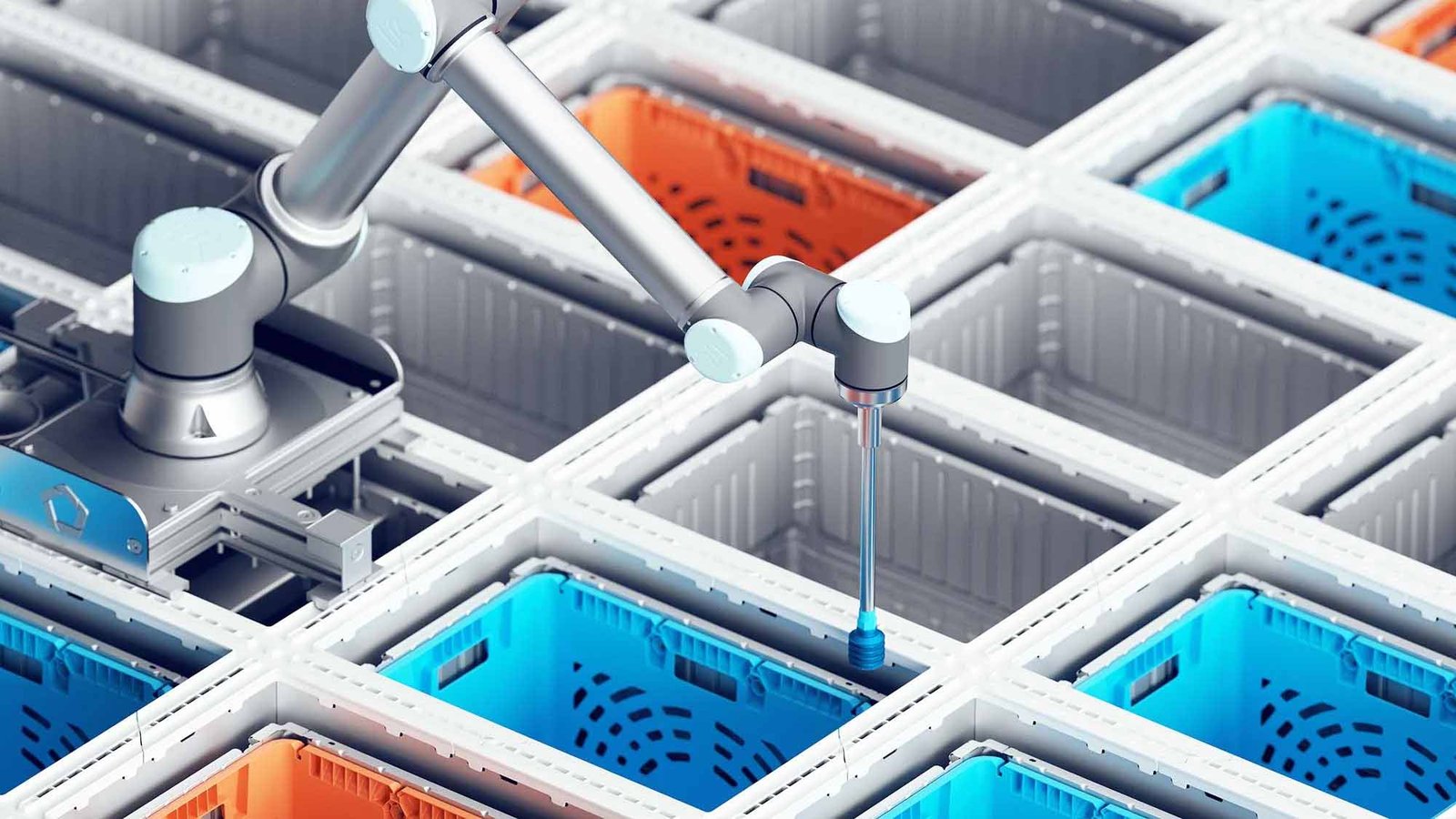
Ocado is better known for groceries, but its robotic picking arms are among the most proven in Europe. The company says its On-Grid Robotic Pick system now runs in 14 fulfilment centres for eight partners and has made more than 350 million picks, with its Luton site picking about half its orders robotically across 45,000 products.
Extend Robotics, based in Reading, lets people with no robotics background control robot arms or humanoids remotely through a 3D virtual reality interface, with AI taking over routine parts of the task. It raised £2.6 million in September to sell finished work rather than robots.
Oxa, spun out of Oxford University in 2014, has turned away from passenger cars to self-driving industrial vehicles for ports, airports and factories. In March it raised $103 million, including $50 million from the government-owned National Wealth Fund. Wayve in London, whose AI learns to drive from data rather than detailed maps, raised $1.2 billion at an $8.6 billion valuation in February and put its first supervised robotaxis on the Uber app in London in September. Neither builds humanoids, but both are leaders in the same embodied AI that humanoids depend on.
Behind the companies sit strong research centres. Bristol Robotics Laboratory, run by UWE Bristol and the University of Bristol, describes itself as the UK's most comprehensive academic robotics centre, with more than 450 academics, researchers and industry staff. Heriot-Watt University's £22.4 million National Robotarium in Edinburgh, run with the University of Edinburgh, focuses on applied work. And Google DeepMind, headquartered in London, is behind Gemini Robotics; its second version, released in July, can control an entire humanoid from feet to fingertips.
At a glance
| Company | Base | What they make | Stage |
|---|---|---|---|
| Humanoid | London | HMND 01 industrial humanoid (wheeled and two-legged) | Pilots; first deployments late 2026 |
| Shadow Robot | London | Dexterous robot hands, teleoperation | On sale to labs and industry |
| Engineered Arts | Falmouth (US-registered parent) | Ameca and other social humanoids | On sale and for hire |
| CMR Surgical | Cambridge | Versius surgical robot | Commercial; Stryker deal pending |
| Ocado | Hatfield | Warehouse robots and picking arms | Deployed at scale |
| Extend Robotics | Reading | VR teleoperation for arms and humanoids | Early commercial |
| Oxa | Oxford | Self-driving software for industrial vehicles | Commercial roll-out |
| Wayve | London | Embodied AI driver for cars | Supervised robotaxi trials |
What Britain does well
The UK's strengths are clear. It has world-class research, a deep pool of AI talent, and DeepMind on its doorstep. It is especially strong on dexterity and touch, which many in the industry see as the hardest unsolved problem in humanoids. Even Tesla is struggling here: according to reporting by The Information, Optimus's hands and forearms contained more than 100 screws and small parts that, as of September, still had to be fitted by hand. Britain also has a habit of building the software layer that other people's robots run on, from Wayve's driver to Extend's teleoperation.
Where it falls short
The weaknesses are just as clear. Scale-up money is thin compared with the US: Humanoid's $270 million in total funding is a fraction of the $39 billion valuation Figure secured in 2025. Manufacturing is the bigger gap. Britain has no equivalent to China's supply chains for motors, gearboxes and batteries, which is why Humanoid builds with Bosch and buys actuators from Schaeffler. And promising firms keep drifting abroad, whether through a US restructuring like Engineered Arts, a buyout option like Stryker's at CMR, or plans to list in New York. DeepMind itself has been owned by Google since 2014.
What the government is doing
Public support is real but modest. ARIA's Robot Dexterity programme has grown from £57 million to £88.5 million, with the extra money aimed at turning lab hardware into working systems. This month the government named eight Robotics Adoption Hubs backed by £40 million, part of the Modern Industrial Strategy, to help firms in farming, surgery, manufacturing and recycling adopt robots. It says robotics could add £150 billion to the economy by 2035 if adoption is maximised, against just £6.4 billion at current levels. State investors also joined the Wayve and Oxa rounds. Useful, but small next to the capital flowing to US and Chinese rivals.
How the UK compares with the US and China
On volume, China is far ahead. Research firm Omdia counted roughly 13,000 humanoids shipped worldwide in 2025, the vast majority by Chinese makers. AgiBot shipped about 5,168, Unitree says it shipped more than 5,500, and UBTech about 1,000, while Tesla, Figure and Agility managed around 150 each. Unitree floated in Shanghai in August and was worth about $66 billion after its first day of trading.
The US leads on money and ambition. Figure is valued at $39 billion, and Tesla reportedly raised Optimus output to several hundred a week in August, with Elon Musk aiming to sell it to the public by late 2027. Washington's ban on foreign-made robots in July also shows how political the race has become. Against that, Britain has no national champion shipping humanoids in volume, but it has a growing role as a supplier of hands, brains and tools. For a sense of what is actually on sale today, see our guide to humanoid robot prices and availability.
Our verdict
Britain is not winning the humanoid race, and on current trends it will not win the volume race. But it is far from out of it. Humanoid has shown that a UK start-up can raise serious money and land serious industrial customers, and Shadow, DeepMind and Wayve put Britain near the front on the technology itself. The real test is whether the next generation of British robots is built, owned and listed here, or merely invented here. On today's evidence, that question is still open.