
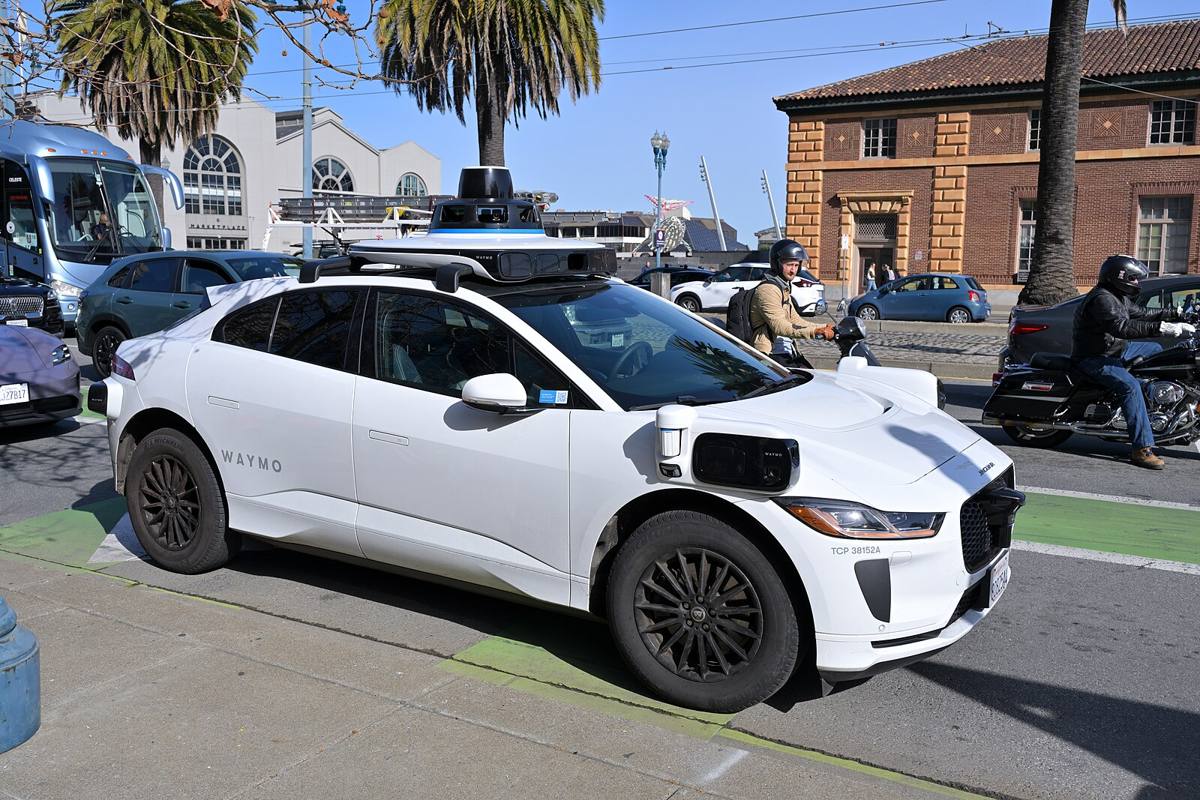
Waymo, the robotaxi company owned by Google's parent Alphabet, is preparing to cut one of its closest ties with Uber. In an interview with Bloomberg published on Wednesday 4 November 2026, co-chief executive Tekedra Mawakana said Waymo will start offering rides in Austin, Texas, and Atlanta, Georgia, through its own app in January 2028.
At the moment those are the only two cities where you cannot book a Waymo directly. Riders there have to use Uber, and even then there is no guarantee a robotaxi turns up. Some early reports described the move as Waymo "quitting" Uber. It is more accurate to say Uber is losing its exclusive hold. Waymo's own app is still more than a year away in both cities, and Uber says it hopes to keep Waymo cars on its platform.
What Waymo said
Speaking to Emily Chang on Bloomberg's The Circuit, Mawakana said Waymo first partnered with Uber because it lacked scale of its own. The result for riders, she said, was uncertain: "In the early days, we would partner because we didn't have the scale, and in that partnering, it was a little bit of a crapshoot. Will I get a Waymo? Will I not get a Waymo?"
That is how the Uber arrangement works today. In Austin and Atlanta, Uber riders can tell the app they would like an autonomous car, but they are only matched with one if a Waymo happens to be nearby. Otherwise they get a human driver.
Mawakana said riders, especially visitors used to Waymo's own app in San Francisco and other cities, want one consistent way to book. "It's important for us to have that relationship with the rider. We've gotten that feedback from the riders in those markets," she said, adding that "learning and partnering with Uber has been a really important part of our journey."
Uber's side of the story
Uber has a different account. A spokesperson told Bloomberg that Uber had asked Waymo about adding a dedicated robotaxi option for Austin and Atlanta riders, so they could choose a Waymo more easily, and that Waymo said no. Waymo declined to comment on the talks.
Uber also told TechCrunch it still plans to host Waymo robotaxis on its app for as long as the two companies agree. TechCrunch reports that the current deal was set to run until May 2028, so January 2028 is when exclusivity ends, not necessarily when the partnership does.
On the same day, Uber made its own case to investors. In prepared remarks for its third-quarter results, reported by The Next Web, Uber said its US robotaxi partners get about 30% more trips per vehicle per day on its network than through their own apps. It expects about 700 fully driverless vehicles on its platform by the end of 2026, and more than 2,000 by the end of 2027. Those are Uber's own figures.
How you book a Waymo today
| Where | How you book | Driver on board? |
|---|---|---|
| Austin and Atlanta | Uber app only, and only if a Waymo is nearby. Waymo's own app planned for January 2028 | No |
| Waymo's other US cities, including San Francisco, Los Angeles, Phoenix, Las Vegas, San Antonio, San Diego and Tampa | Waymo app | No |
| London (Waymo) | Not open to the public. Waymo says its London service will be on the Waymo app | Testing with trained specialists behind the wheel |
| London (Wayve) | Uber app (UberX, Uber Electric or Uber Comfort), matched if one is available | Yes, a TfL-licensed driver |
For the full city-by-city picture, including Tesla, Zoox and Baidu, see our robotaxi tracker.
Why Waymo wants riders on its own app
Waymo is big enough now to go it alone. Bloomberg puts its fleet at about 4,000 vehicles across the US, carrying more than 500,000 trips a week. When it opened San Antonio, San Diego and Tampa to the public in October, it told people to download the Waymo app, not Uber.
Owning the app means owning the customer: the ride history, the pricing and the experience from the moment you book. Mawakana told Bloomberg that "price is not the first priority" and that Waymo is "not trying to have this race to the bottom". Bloomberg notes Waymo rides still cost more than a cab or ride-hail on average. A platform such as Uber, which mixes robotaxis with cheaper human drivers, makes that kind of premium harder to hold.
Uber's argument runs the other way: a robotaxi earns more when it sits on the biggest network with the most riders. Both can be true, which is why the two companies are now rivals in some cities and partners in others.
What it means for London
London is where both business models are about to meet, and the Austin and Atlanta decision makes the dividing line clearer.
Waymo: its own app, no driver, but no date
When Waymo announced London in October 2025, it said its service would be "available via the Waymo app", run with fleet partner Moove. It began autonomous testing in April 2026 with trained specialists behind the wheel, and in September said it would apply through the government's new Automated Passenger Services (APS) permit scheme, which allows rides with nobody in the driving seat but needs approval from the Department for Transport and consent from Transport for London.
Waymo has said it wants fully driverless rides in London this year. But in October, TfL told the London Assembly that no application had yet reached it for consent, and that its guidance for applicants would not be ready "for some time", Highways magazine reported. We have seen no public report of a permit being granted.
Wayve and Uber: already running, with a driver
Uber's London robotaxi partner is British company Wayve. Since 3 September 2026, Londoners booking an UberX, Uber Electric or Uber Comfort can be matched with a Wayve-driven electric Ford Mustang Mach-E at no extra cost, with a TfL-licensed private hire driver on board. Riders can opt in under Trip Preferences in the Uber app, and Wayve said more than 140,000 had done so by launch.
It is a small fleet: Highways reported just 15 cars for the whole city, and the magazine tried and failed to get one. In other words, London's only robotaxi today works much like the Uber model Mawakana called a "crapshoot", where you ask and hope. That is not a safety point, it is a booking one, and it is exactly the experience Waymo says it wants to avoid.
And a third player
Freenow by Lyft is testing around 24 Baidu Apollo Go cars in the London borough of Brent and hopes to launch fully driverless rides as early as next year, the Guardian reported on 1 November.
The rules and the politics
The APS permit scheme opened for applications on 22 May 2026, and the government says it is working towards the full Automated Vehicles Act framework in the second half of 2027. Meanwhile, London's mayor Sadiq Khan has called for the power to cap robotaxi numbers, telling the Guardian: "London isn't San Francisco." Our explainer on the Automated Vehicles Act covers how the permits work.
Our take
For riders in Austin and Atlanta, nothing changes for more than a year. The bigger signal is strategic. The world's largest Western robotaxi operator has decided that its own app, not Uber's, is where it wants to meet customers. In London, that probably means the first fully driverless rides, whenever they arrive, will be booked in different apps depending on whose car it is: Waymo in its own app, Wayve and others through Uber, Baidu through Freenow. For Londoners, the practical upshot is simple. If you want a Waymo when it launches, you will almost certainly need the Waymo app, not Uber.
Frequently asked questions
Is Waymo leaving Uber?
Not yet, and not completely. Waymo plans to launch its own app in Austin and Atlanta in January 2028, ending Uber's exclusive role there. Uber says it plans to keep hosting Waymo robotaxis on its app for as long as both companies agree.
When can I book a Waymo directly in Austin or Atlanta?
Waymo says January 2028. Until then, the only way to ride a Waymo in either city is through the Uber app, and you are only matched with one if a Waymo is nearby.
Why is Waymo ending the Uber-only arrangement?
Co-chief executive Tekedra Mawakana told Bloomberg that booking through Uber was "a little bit of a crapshoot" because riders never knew whether they would get a robotaxi or a human driver, and that Waymo wants a direct relationship with riders.
Can I ride a Waymo in London?
Not yet. Waymo is testing in London with trained specialists behind the wheel. It needs an Automated Passenger Services permit and Transport for London's consent before it can carry the public without a driver, and no permit has been reported as granted.
Will Waymo use Uber in London?
Waymo has said its London service will be available through the Waymo app, with Moove running its fleet. Uber's London robotaxi partner is Wayve, whose cars still carry a licensed driver.
When will fully driverless taxis start in the UK?
No date is confirmed. Pilots without a safety driver have been possible to apply for since May 2026, Waymo and Freenow by Lyft have both talked about driverless launches, and the government is working towards the full regulatory framework in the second half of 2027.
Keep exploring
- Robotaxi tracker: where you can ride a driverless taxi in November 2026
- Self-driving cars in the UK: when can you ride in one? The Automated Vehicles Act explained
- Waymo picks Toyota to build its next robotaxi, with the UK in line after Japan
- London's robotaxis meet their first organised resistance
- Waymo heads to Toronto: who's winning the global robotaxi race?