
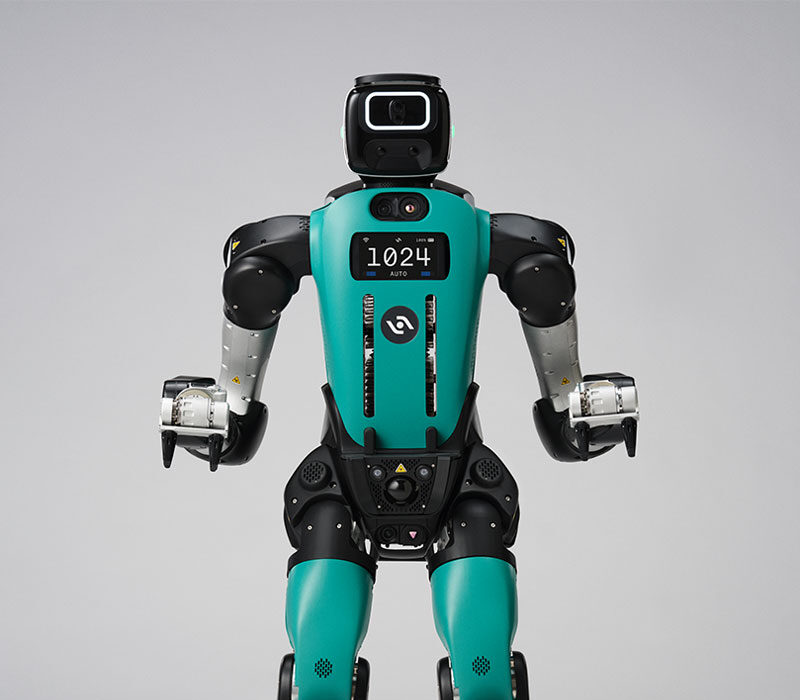
For years, investors who wanted a slice of the humanoid robot boom had few ways in that were not a huge tech conglomerate or a Chinese listing. That changed on Thursday 5 November 2026, when Agility Robotics, the Oregon company behind the two-legged Digit warehouse robot, began trading on the Nasdaq stock market under the ticker AGLT. Business Insider described it as the first humanoid-focused company to go public in the US.
The listing matters well beyond Wall Street. Going public forced Agility to publish the kind of numbers its private rivals keep to themselves: what a humanoid robot costs to rent or buy, what it costs to build, and how much money the business is losing. Here is what we learned, and what it tells us about where humanoid robots really are.
The key facts
| What | Detail |
|---|---|
| Ticker | AGLT (shares) and AGLTW (warrants), Nasdaq |
| How it listed | Merger with Churchill Capital Corp XI, a special purpose acquisition company (SPAC), completed on 4 November 2026 |
| First day of trading | 5 November 2026. Shares fell as low as $8.40 during the session, then closed at $11.51, up 2.2% on the previous close |
| Money raised | About $465m gross, before deal costs |
| Valuation | Existing equity valued at about $2.5bn in the merger |
| 2025 results | $1.8m revenue, $138.1m net loss |
| Robot price | About $8,500 a month to rent, or about $200,000 to buy, plus set-up and software fees |
How Agility got to Nasdaq
Agility did not do a traditional stock market flotation. Instead it merged with Churchill Capital Corp XI, a listed "blank cheque" company run by former Citigroup banker Michael Klein, whose earlier SPACs took nuclear start-up Oklo and electric carmaker Lucid public. Churchill XI's shareholders approved the deal on 2 November, it completed on 4 November, and the combined company started trading as Agility Robotics the next morning.
The deal and related financing were expected to bring in about $465m before expenses, according to the companies. That is made up of roughly $164m left in Churchill XI's trust account after shareholder redemptions, about $201m from a share sale to investors at $10 a share led by Foxconn, and $100m of equity funding Agility had already received. Existing Agility shareholders, whose backers include Amazon, Foxconn, Nvidia and SoftBank, rolled all of their equity into the new company and are subject to a lock-up period.
The first day was choppy. According to OregonLive, reported by AI Brief, the shares fell as low as $8.40 during the session. They recovered to close at $11.51, up 2.2% on the previous day's close, Business Insider reported. "There's something to be said for being first," chief executive Peggy Johnson told Business Insider.
What Digit actually costs
The most useful thing about the listing is the price list. In its registration filing with the US Securities and Exchange Commission, Agility set out "illustrative unit economics" for two ways of paying for its next robot, Digit 5, which Ars Technica summarised:
- Robots-as-a-service (renting): about $25,000 one-off for delivery and deployment, then $8,500 a month for software and maintenance.
- Buying outright: about $200,000 for the hardware plus about $20,000 for deployment, then about $36,000 a year (roughly $3,000 a month) for software and maintenance.
Agility's chief financial officer, Michael Beer, pitched it to investors on 6 October as replacing about $200,000 a year of labour with about $100,000 a year of robot costs on a subscription, according to Ars. Those are the company's own illustrations, not audited results from customers.
The filings also show what a Digit costs Agility to make. The first Digit 5 robots are expected to cost about $150,000 each in parts. Agility hopes that falls to $75,000 once it builds 1,000 robots a year, and to about $30,000 at 10,000 a year, with each robot lasting around five years. In other words, the business only really works if production scales up dramatically.
The losses, and the big order behind the story
Agility brought in just $1.8m of revenue in 2025 while reporting a $138.1m net loss, according to its merger filings as reported by Business Insider. About $38m of that loss was non-cash stock awards for staff, but the company still used $99.8m in cash to run the business, and it lost $2.7m on its sales before any research costs. More than half of its revenue came from five robots bought by one of its own investors. "We expect to incur additional losses and higher operating expenses for the foreseeable future," the company warned.
The growth case rests on Digit 5. Agility says it has more than $300m in orders for 1,000 Digit 5 robots from a single customer, to be paid for over three years. That money is not guaranteed: the order depends on Agility hitting deadlines and delivering robots with the promised features. Agility is aiming for first Digit 5 deliveries in the first half of 2027 and general availability by the end of that year.
There is real-world work behind the hype. Digit has been deployed at nine customer facilities, including sites run by Amazon, Toyota and logistics company GXO, Business Insider reported, and Agility says its robots have clocked more than 65,000 hours of operation. In late October GXO said it would add Digit at two more US warehouses, in Statesville, North Carolina, and Lebanon, Tennessee, from early 2027, starting with today's Digit 4 and moving to Digit 5 when it is available. That builds on GXO's site in Flowery Branch, Georgia, where Agility says Digit has moved more than 100,000 totes.
What it means for humanoid robots
1. A reality check on value. The merger valued Agility at about $2.5bn, far below private rivals such as Figure AI at about $39bn, Germany's Neura Robotics at around $7bn and Apptronik at about $5.5bn, Business Insider noted. "Companies with deployments who are actually shipping hardware today are valued by the market a lot lower than companies that are betting on this future," ABI Research analyst George Chowdhury told the publication. Agility's share price now gives everyone a public yardstick.
2. Real numbers at last. Until now most humanoid makers have kept prices and costs private. Agility's filings put a public figure on renting a humanoid and on the cost of building one. Expect rivals, customers and investors to measure everyone else against them.
3. Still a warehouse robot, not a butler. Agility itself is clear about limits. "Digit 5 is not going to walk into your living room and do dishes and stuff like that," co-founder Jonathan Hurst told Ars Technica. "Nobody is." Digit's job is moving totes in structured workplaces, and its own filings admit humanoids are unproven at scale.
4. America versus China. Chinese companies such as Unitree, which listed in Shanghai this summer, dominate the market today: Chinese firms accounted for about 90% of humanoid robot shipments last year, according to Omdia figures cited by Business Insider. Agility builds Digit at its own factory in Oregon, and the US government has been tightening rules on foreign-made robots. "It's good for the US to show strength in this area," Johnson said.
The UK angle
There is a genuine British link inside Digit 5. Its fast-charging battery comes from Nyobolt, the UK battery company, which Agility says can deliver 90 minutes of runtime from a nine-minute charge under an exclusive deal for humanoid robots. Hurst told Ars the two firms spent "well over a year" designing the custom pack. We covered the partnership in detail in our Nyobolt and Digit 5 explainer.
Digit is not working in Britain yet: none of the customer sites named in Agility's listing materials is in the UK. As for buying the shares, AGLT is a US-listed stock. We could not confirm which UK investment platforms have added it yet, so if you are curious, check with your own provider, and remember this is not investment advice.
Frequently asked questions
What is Agility Robotics' ticker symbol?
AGLT on the Nasdaq. Its warrants trade as AGLTW.
When did Agility Robotics go public?
Its merger with Churchill Capital Corp XI completed on 4 November 2026, and the shares began trading on Nasdaq on 5 November 2026.
How much money did Agility raise?
About $465m in gross capital before transaction costs, including a roughly $201m share sale led by Foxconn and $100m it had already received.
How much does a Digit robot cost?
Agility's filings give an illustrative price of about $8,500 a month to rent, after a one-off deployment fee of about $25,000, or about $200,000 to buy plus deployment and yearly software fees.
Can I buy a Digit robot for my home?
No. Digit is sold only to businesses for warehouse and factory work, and Agility says it is not designed for homes.
Is Agility Robotics profitable?
No. It reported $1.8m of revenue and a $138.1m net loss in 2025, and says it expects to keep losing money for the foreseeable future.
Keep exploring
- Humanoid robots you can actually buy in 2026: prices, UK availability and reality check
- Nine-minute charging: the British battery behind Digit 5
- Humanoid robots explained: what they can and can't do in 2026
- Tesla starts building Optimus robots in Fremont
- China blocks SoftBank's $5.4bn takeover of ABB Robotics
- Our humanoid robot tracker